
-


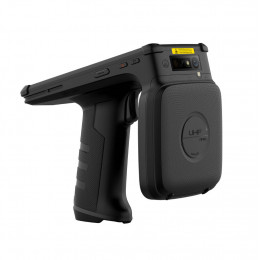
- Accuracy 5-10 m
- Antenna 5 dBi, circular polarization; factory setting 902-928 MHz
- Application areas of TSD For warehouse, For logistics, For inventory, For store, For labeling
- Audio 1 speaker; 2 microphones
- Average reading time 12 ms per character (32 bits)
- Average recording time 60 ms per character (32 bits)
- Battery 8350 mAh: main 5000 mAh + replaceable handle battery 3350 mAh; handle supports battery 6700 mAh
- Buttons Power supply; volume +/-; UHF; SCAN; programmable button
- Camera Front Camera: 5 MP, Fixed focus, Main Camera: 13 MP, Autofocus, Dual Flash, PDAF
- Cellular (WWAN) GSM 850/900/1800/1900; WCDMA B1/B2/B5/B8; CDMA 1x/EVDO BC0; TD‑SCDMA B34/B39; TDD‑LTE B34/B38/B39/B40/B41; FDD‑LTE B1/B3/B5/B7/B8/B20/B28; 5G n1/n3/n8/n28/n41/n78/n79; VoNR; SA/NSA Sub‑6
- Charging USB Type-C; QC 3.0; Automatic PC/Charger recognition
- Continuous UHF operation More than 5 hours when reading at maximum power
- CPU 8 cores, 2.4 GHz
- Display 6.0", capacitive touch screen, 1440 ×720
- Drop test Multiple falls from a height of 1.5 m
- Equipment Power Adapter ×1; USB Type-C cable ×1; SIM card extraction tool ×1
- ESD protection ±15 kV air discharge; ±8 kV contact discharge
- Flash memory 64 GB
- GNSS frequencies GPS L1; BeiDou B1; GLONASS L1
- Group reading up to 1300 read operations/second with Impinj H47
- Interfaces Waterproof USB Type-C; USB 2.0 High Speed; OTG
- Keyboard Sensory
- Memory card microSD up to 256 GB
- Mode FHSS or fixed frequency
- Navigation GPS + GLONASS + BeiDou; AGPS support
- Operating range 860-930 MHz; default is 920-925 MHz; depends on the region
- operating system Android 14
- Operating temperature -20…+50 °C
- Output power 1-33 dBm
- Overall dimensions (WxDxH), mm 189 × 91 × 138 mm
- Permissible humidity 5-95%, non-condensing
- RAM memory 4 GB
- Reading range ≥9 m with 9662 card; depends on label and conditions
- Recording range 0-6 m with the 9662 card; depends on the placemark and conditions
- Resistance to external influences IP67
- RFID engine Impinj E710
- Scanning module 2D image
- Sensors G‑sensor; light and proximity sensors; electronic compass; gyroscope
- SIM Slots SIM (2 × Nano-SIM)
- Sound and visual indication Sound, vibration, LED indicator
- Storage temperature -40...+70 °C without battery
- Tagging Protocols ISO 18000-6C / EPCC1G2
- Type of TSD Industrial RFID terminal
- UHF Power Consumption Less than 10 Watts
- Weight 668 g with batteries
- Wi-Fi (WLAN) IEEE 802.11ac/a/b/g/n/d/e/h/i/j/k/r/v/w, 2,4G/5G
- Wi‑Fi Frequencies 2.412-2.472 GHz; 5.180-5.825 GHz - depends on the region
-
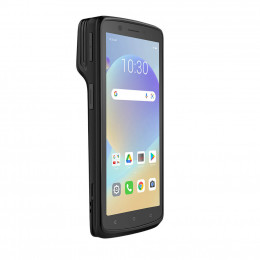
- Accuracy 5-10 m in open space
- Antenna 5 dBi, circular polarization; factory setting 902-928 MHz
- Application areas of TSD For warehouse, For logistics, For inventory, For store, For labeling
- Audio 1 speaker; 2 noise-canceling microphones
- Average reading time 12 ms per character (32 bits)
- Average recording time 60 ms per character (32 bits)
- Battery At least 11,700 mAh: main 5000 mAh + replaceable handle battery 6700 mAh
- Buttons Power supply; volume +/-; UHF; SCAN; programmable button; separate handle on/off button
- Camera Front Camera: 5 MP, Fixed focus, Main Camera: 13 MP, Autofocus, Dual Flash, PDAF
- Cellular (WWAN) GSM 850/900/1800/1900; WCDMA B2/B4/B5/B8; TDD‑LTE B38/B39/B41; FDD‑LTE B2/B4/B5/B7/B8/B12/B17/B13/B25/B26/B66/B71 GSM 850/900/1800/1900; WCDMA B1/B2/B5/B8; CDMA BC0 EVDO; TD‑SCDMA B34/B39; LTE B1/B3/B5/B7/B8/B20/B28/B34/B38/B39/B40/B41; CA B1+B3, B39+B41
- Charging USB Type-C; QC 3.0; Automatic PC/Charger recognition
- Continuous UHF operation More than 5 hours when reading at maximum power
- CPU 8 cores, 2.0 GHz
- Display 5.5", capacitive touch screen, 1440×720
- Drop test Multiple falls from a height of 2.0 m, Rolling 1000 cycles from a height of 0.5 m
- Equipment Power Adapter ×1; USB Type-C cable ×1
- ESD protection ±15 kV air discharge; ±8 kV contact discharge
- Flash memory 64 GB
- Frequency 13.56 MHz
- GNSS frequencies GPS L1/L5; BeiDou B1; GLONASS L1/L5
- Group reading up to 1300 marks/second with Impinj H47
- Hot swap battery Changing the battery of the handle without turning off the terminal
- Interfaces Waterproof USB Type-C; USB 2.0 High Speed; OTG
- Keyboard Sensory
- Memory card microSD up to 256 GB
- Mode FHSS or fixed frequency
- Navigation GPS + GLONASS + BeiDou; AGPS support
- Operating range 840-960 MHz; default is 902-928 MHz; depends on the region
- operating system Android 11
- Operating temperature -20…+50 °C
- Output power 1-33 dBm
- Overall dimensions (WxDxH), mm 170 × 80 × 132.7 mm; case thickness 16.4 mm
- Permissible humidity 5-95%, non-condensing
- Protocols ISO 15693; ISO 14443A/B without encryption protocols; NFC
- RAM memory 4 GB
- Reading range ≥10 m with Impinj H47 tag; depends on tag and conditions
- Recording range 0-6 m with the 9662 card; depends on the placemark and conditions
- Resistance to external influences IP67
- RFID engine Impinj E510
- Scanning module 2D image
- Sensors G‑sensor; light and proximity sensors; electronic compass; gyroscope
- SIM Slots SIM + TF
- Sound and visual indication Sound, vibration, LED indicator
- Storage temperature -40...+60 °C with battery; -40...+70 °C without battery
- Tagging Protocols ISO 18000-6C / EPCC1G2
- Type of TSD Industrial RFID terminal
- UHF Power Consumption Less than 8 Watts
- Weight 630 g with batteries
- Wi-Fi (WLAN) IEEE 802.11a/b/g/n/ac/ax, 2,4G/5G
- Wi‑Fi Frequencies 2.412-2.472 GHz; 5.170-5.825 GHz - depends on the region
-
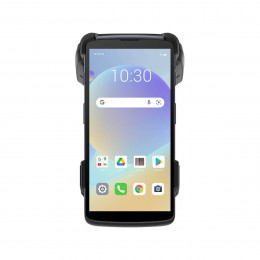
- Accuracy 5-10 m in open space
- Antenna 0.5 dBiC, circular polarization; support 902-928 MHz
- Application areas of TSD For warehouse, For logistics, For inventory, For store, For labeling
- Audio 1 speaker; 2 noise-canceling microphones
- Average reading time 12 ms per character (32 bits)
- Average recording time 60 ms per character (32 bits)
- Battery 5000 mAh
- Buttons Power supply; volume +/-; 2 scan buttons; programmable button
- Camera Front Camera: 5 MP, Fixed focus, Main Camera: 13 MP, Autofocus, Dual Flash, PDAF
- Cellular (WWAN) GSM 850/900/1800/1900; WCDMA B2/B4/B5/B8; TDD‑LTE B38/B39/B41; FDD‑LTE B2/B4/B5/B7/B8/B12/B17/B13/B25/B26/B66
- Charging USB Type-C; QC 3.0; Automatic PC/Charger recognition
- Continuous UHF operation More than 5 hours when reading at maximum power
- CPU 8 cores, 2.0 GHz
- Display 5.5", capacitive touch screen, 1440×720
- Drop test Multiple falls from a height of 1.8 m
- Equipment Power Adapter ×1; USB Type-C cable ×1
- ESD protection ±15 kV air discharge; ±8 kV contact discharge
- Flash memory 64 GB
- Frequency 13.56 MHz
- GNSS frequencies GPS L1; BeiDou B1; GLONASS L1
- Group reading up to 700 marks/second with Impinj H47
- Hot swap battery Changing the battery of the handle without turning off the terminal
- Interfaces Waterproof USB Type-C; USB 2.0 High Speed; OTG
- Keyboard Sensory
- Memory card microSD up to 256 GB
- Mode FHSS or fixed frequency
- Navigation GPS + GLONASS + BeiDou; AGPS support
- Operating range 840-960 MHz; default is 902-928 MHz; depends on the region
- operating system Android 14
- Operating temperature -20…+50 °C
- Output power 1-33 dBm
- Overall dimensions (WxDxH), mm 156 × 76 × 14 mm (UHF antenna 28.2 mm)
- Permissible humidity 5-95%, non-condensing
- Protocols ISO 15693; ISO 14443A/B without encryption protocols; NFC
- RAM memory 4 GB
- Reading range Back side : ≥6 m; forward: front side ≥3 m with 9662 card; depends on label and conditions
- Recording range 0-2 m with the 9662 card; depends on the placemark and conditions
- Resistance to external influences IP68
- RFID engine Impinj E510
- Scanning module 2D image
- Sensors G‑sensor; light and proximity sensors; electronic compass; gyroscope
- SIM Slots SIM + TF
- Sound and visual indication Sound, vibration, LED indicator
- Storage temperature -40...+60 °C with battery; -40...+70 °C without battery
- Tagging Protocols ISO 18000-6C / EPCC1G2
- Type of TSD Industrial RFID terminal
- UHF Power Consumption Less than 4.5 Watts
- Weight 325g with BATTERY
- Wi-Fi (WLAN) IEEE 802.11a/b/g/n/ac/ax-Ready, 2,4G/5G
- Wi‑Fi Frequencies 2.412-2.472 GHz; 5.180-5.825 GHz - depends on the region
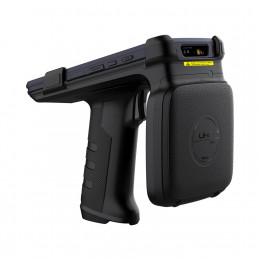
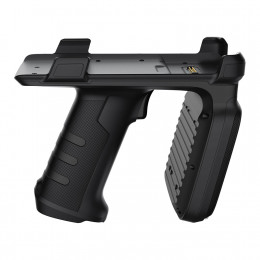
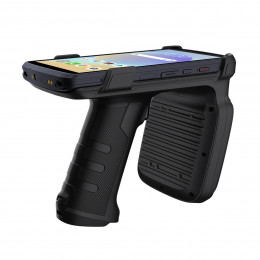
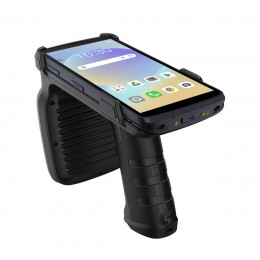
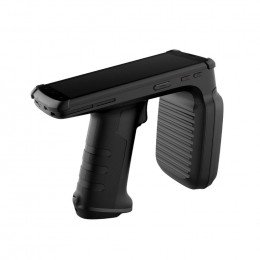
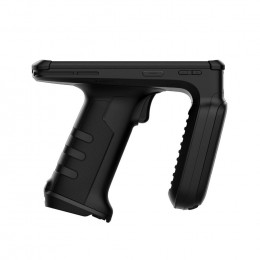
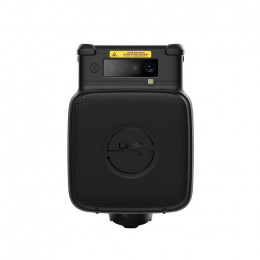
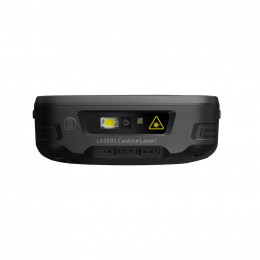
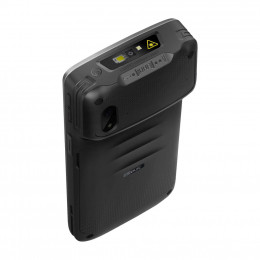
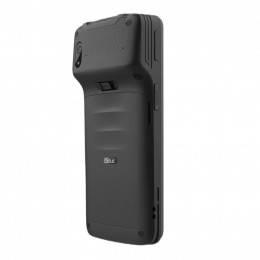
RFID mobile data terminals are handheld devices designed to identify and track goods, equipment and assets using RFID tags. Unlike conventional barcode scanning, RFID technology can read multiple tags without requiring direct line-of-sight scanning of each individual item.
MERTECH offers assistance in selecting SEUIC RFID terminals for businesses in Tashkent and across Uzbekistan. The Cruise2U 5G U9, Utouch, Utouch2 and Utouch2S models provide different reading speeds, ranges and levels of device protection.
MERTECH RFID Terminals
| Model | Key Features | Applications |
|---|---|---|
| SEUIC Cruise2U 5G U9 | Impinj E710, up to 1,300 tags/sec | Large warehouses and logistics |
| SEUIC Utouch | Up to 200 tags/sec, reading range over 8 m | Inventory and asset tracking |
| SEUIC Utouch2 | Impinj E710, up to 1,300 tags/sec | High-volume inventory operations |
| SEUIC Utouch2S | Impinj E510, up to 700 tags/sec | Mobile inventory management |
How to Choose an RFID Terminal
- Determine the required RFID tag reading distance.
- Consider the number of tags that must be read simultaneously.
- Check compatibility with your inventory management software.
- Choose suitable device protection and battery capacity.
- Verify the permitted operating frequency range in Uzbekistan.
Buy RFID Terminals in Uzbekistan
MERTECH helps businesses select RFID equipment for warehouses, retail operations, logistics and manufacturing. Our specialists can compare models, assess reading requirements and recommend suitable configurations. Equipment is supplied with a manufacturer warranty. Please confirm availability and delivery terms before ordering.
Frequently Asked Questions
How is an RFID terminal different from a regular handheld terminal?
An RFID terminal can read radio-frequency tags, including multiple tags simultaneously, without directly scanning each one. A conventional handheld terminal primarily reads barcodes.
Can RFID terminals be used for stocktaking?
Yes. With RFID-tagged items and compatible software, terminals can streamline inventory counting and asset identification.
How do I choose an RFID terminal for a warehouse?
Consider reading range, scanning speed, tag specifications, working conditions and software requirements.