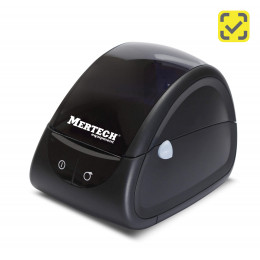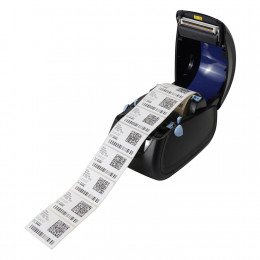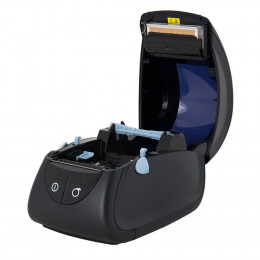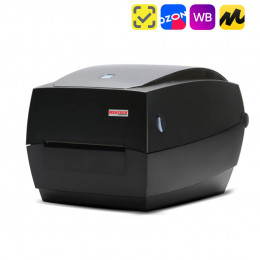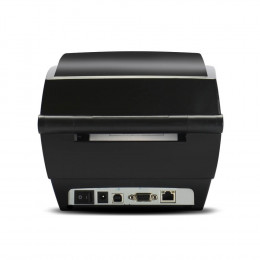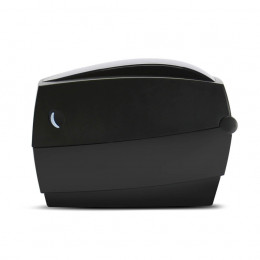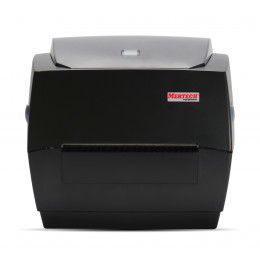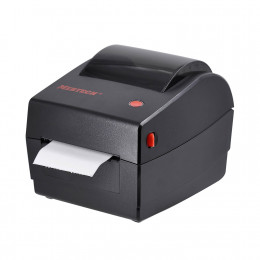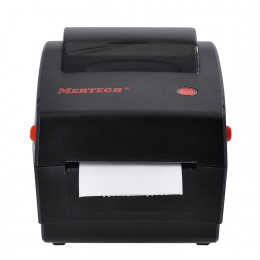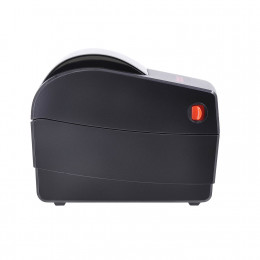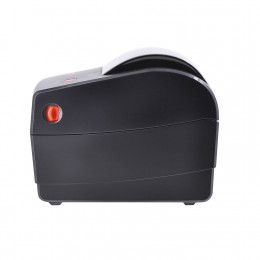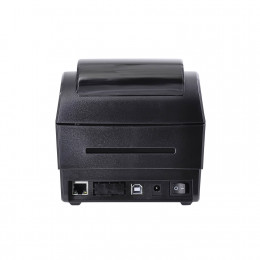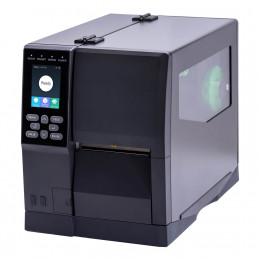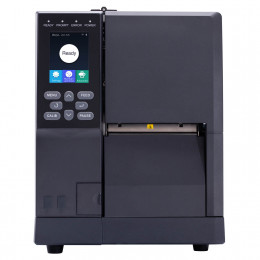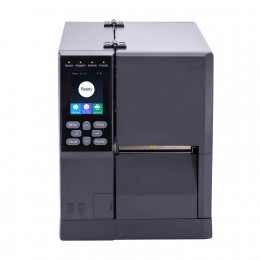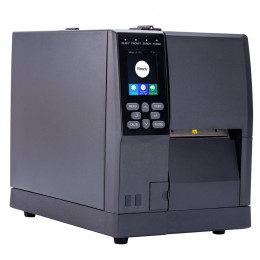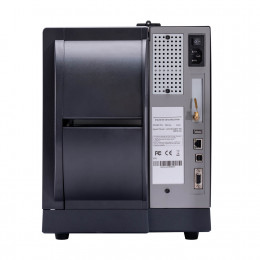
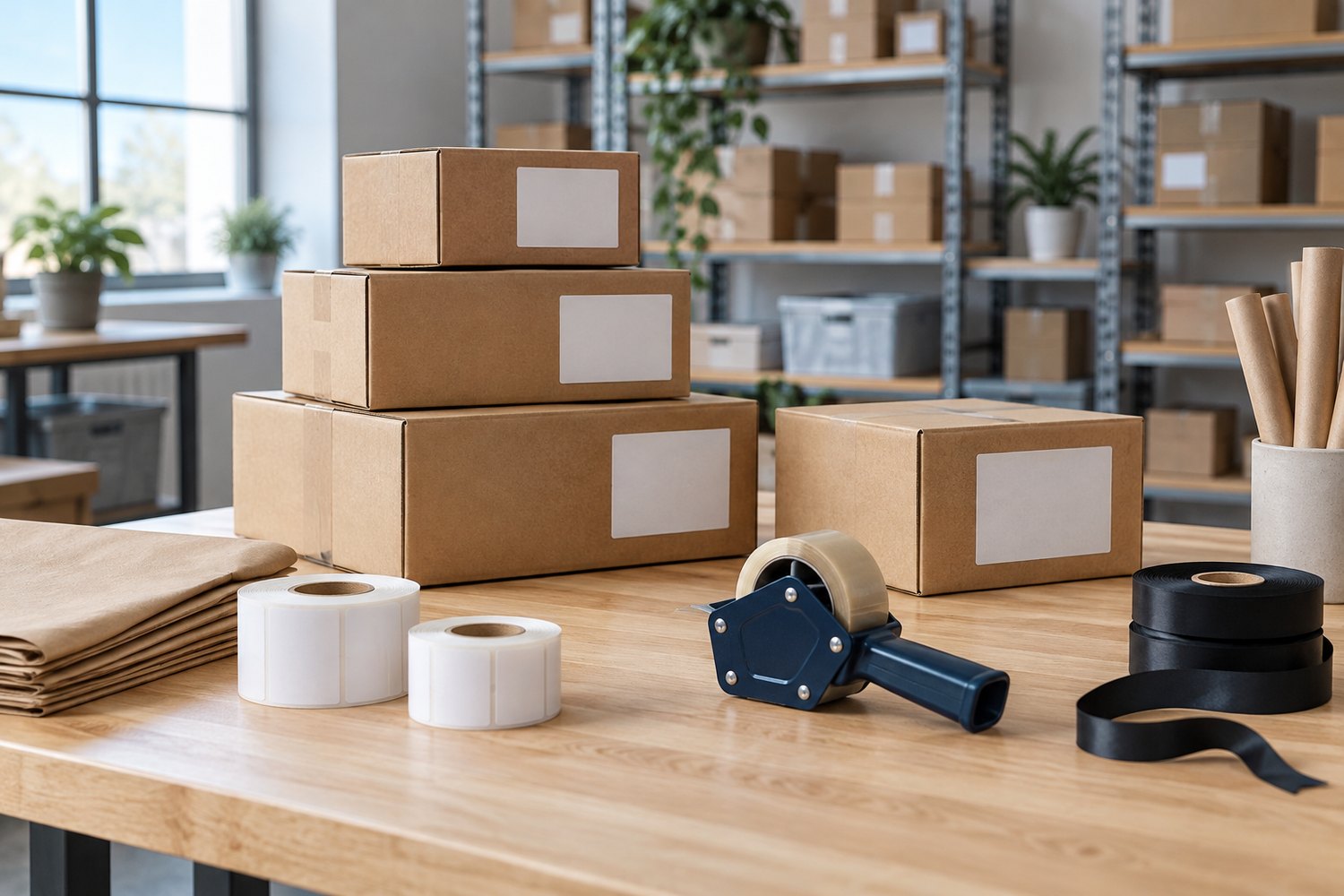
The main difference between a direct thermal printer and a thermal transfer printer is how the image gets on the label. A direct thermal printer uses no ink: a heated printhead darkens special heat-sensitive paper. A thermal transfer printer melts ink from a ribbon onto the label. Direct thermal printing is cheaper and simpler, but labels fade within months. Thermal transfer printing costs more per label, but the print lasts for years and resists sunlight, moisture and abrasion. This guide compares both technologies, explains the difference between direct thermal and thermal transfer labels, and helps you choose a label printer for a store, warehouse or production line in Uzbekistan, with prices in UZS.
Thermal vs thermal transfer at a glance
| Feature | Direct thermal printer | Thermal transfer printer |
|---|---|---|
| How it prints | heat darkens the label | heat transfers ink from a ribbon |
| Supplies | direct thermal labels only | labels and ribbon |
| Label life | weeks to about a year | one year to several years |
| Resistance to sun, heat and abrasion | low | high |
| Label materials | thermal paper only | paper, polypropylene, PET, fabric |
| Printer price | lower | higher |
| Maintenance | minimal | ribbon changes and tension setup |
If the label only needs to last a few weeks or months, a direct thermal printer is enough. If it must stay readable for a year or more, or survive cold, moisture and handling, choose a thermal transfer printer.
Browse all label printers, including direct thermal printers and thermal transfer printers.
How direct thermal printing works
A direct thermal printer has no cartridge, toner or ink ribbon. The image is created by the printhead, a row of tiny heating elements. When an element heats up, the heat-sensitive coating on the label turns black at that spot, forming barcodes, text and graphics.
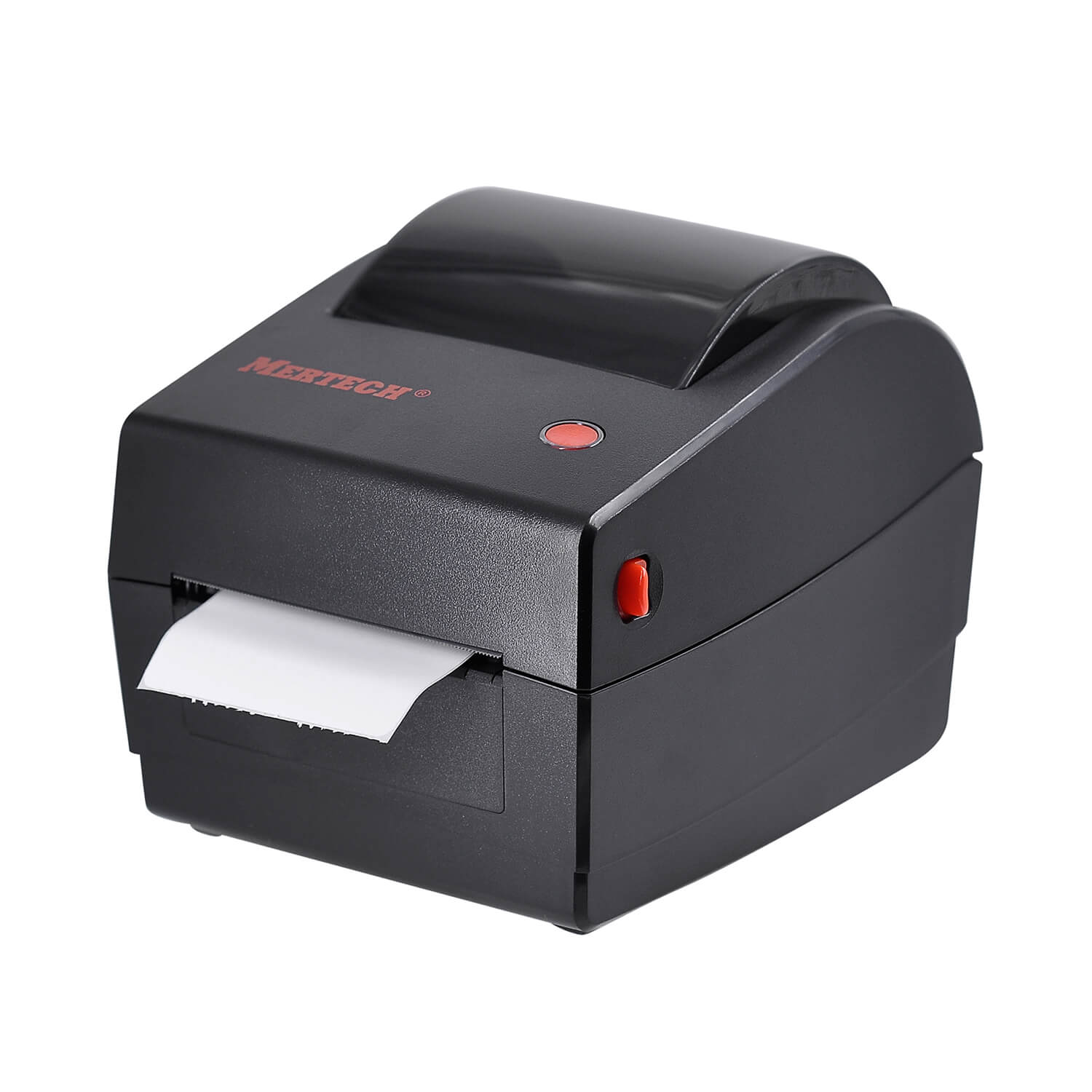
You see direct thermal printing every day: receipts, queue tickets and weight labels in supermarkets are printed this way. These printers are fast, quiet and need almost no maintenance beyond changing the roll and cleaning the printhead.
The downside is the paper itself. A direct thermal label darkens with heat, fades in light and wears off with friction. A receipt left in a wallet or on a car dashboard becomes unreadable within months, and labels behave the same way.
Direct thermal printing uses no ink, so each label costs less. The trade-off is a short image life, which is the main limitation of the technology.
How thermal transfer printing works
A thermal transfer printer prints through an ink ribbon. The ribbon is a thin film coated with wax, resin or a wax-resin mix. It runs between the printhead and the label. The printhead heats specific points, the ink melts and bonds to the label surface. Look at a used ribbon and you will see a negative of every printed label.
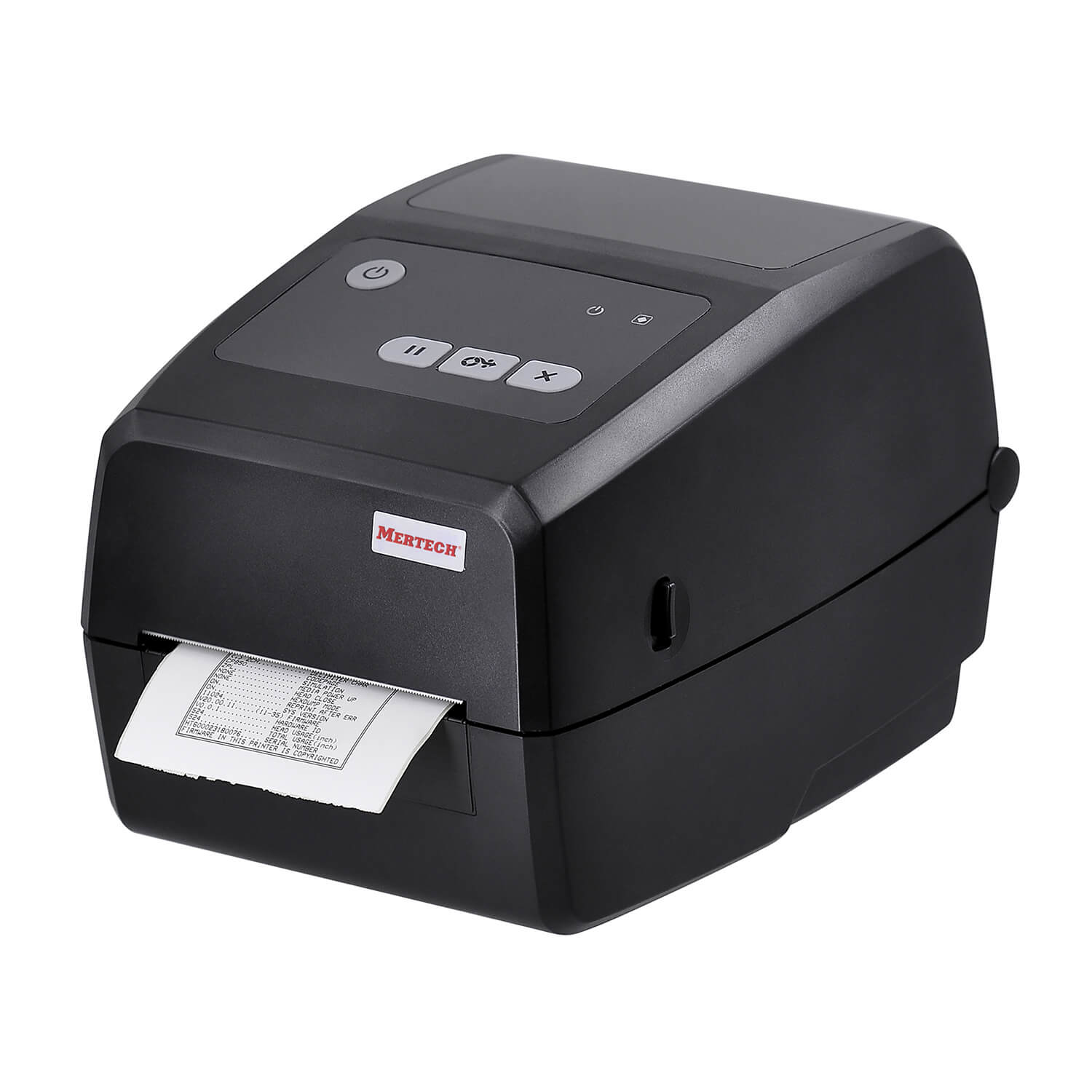
Thermal transfer printing produces sharp, durable images that do not fade in sunlight and resist moisture, cold, alcohol and abrasion. That is why it is used for products with a long shelf life, warehouse and shipping labels, clothing tags and asset labels.
Most thermal transfer printers also support direct thermal mode: remove the ribbon, load direct thermal labels, and the printer works like a direct thermal model.
| Ribbon type | Label material | Durability |
|---|---|---|
| Wax | paper labels | basic, for boxes and shelves |
| Wax-Resin | paper and synthetic labels | medium, resists smudging |
| Resin | polypropylene, PET, fabric | high, resists chemicals and heat |
Thermal transfer costs more to run because of the ribbon, but it is the only option for labels that must stay readable for years or be printed on synthetic materials.
Direct thermal labels vs thermal transfer labels
Direct thermal labels have a heat-sensitive top coating. Thermal transfer labels do not: they are plain paper or synthetic stock, and the ink comes from the ribbon.
To tell them apart, scratch the label quickly with a fingernail. A direct thermal label leaves a dark mark, while a thermal transfer label stays white. The two are not interchangeable: a direct thermal printer cannot print on thermal transfer labels.
| Feature | Direct thermal label | Thermal transfer label |
|---|---|---|
| Top coating | heat-sensitive | none |
| Ribbon needed | no | yes |
| Materials | thermal paper | paper, polypropylene, PET, nylon |
| Image life | weeks to a year | years |
Cost, speed and durability compared
Printer price. MERTECH desktop direct thermal printers start at 1.36 million UZS, thermal transfer printers at 2.95 million UZS, and industrial models at 11.5 million UZS.
Cost per label. With direct thermal, you pay only for thermal labels. Thermal transfer adds the ribbon, but the labels themselves are cheaper because they have no thermal coating. On large volumes, the difference per label is small.
Speed. Desktop models of both types print at roughly 100–180 mm/s. Speed depends more on the printer class than on the technology.
Print quality. Standard models print at 203 dpi. For small Data Matrix and QR codes, choose a 300 dpi thermal transfer printer.
Pros and cons of direct thermal printers
Pros:
- no ink, toner or ribbon costs;
- easy roll loading and minimal setup;
- compact design and lower price;
- fast, quiet printing.
Cons:
- prints fade with light, heat and time;
- works only with special thermal labels;
- cannot print on film or fabric;
- the printhead wears faster from direct contact with paper.
Which printer for which application
| Application | Recommended | Why |
|---|---|---|
| Price tags and scale labels | direct thermal | labels last days or weeks |
| Fresh food labels | direct thermal | short product shelf life |
| Shipping labels for Uzum Market, Wildberries, Ozon | 58–80 mm direct thermal | the box reaches the customer in days |
| Warehouse locations and shelving | thermal transfer | labels must last for years |
| Clothing, footwear, textiles | thermal transfer | fabric tags, wash resistance |
| Cosmetics, household chemicals, pharmacy | thermal transfer | contact with liquids and alcohol |
| ASL BELGISI product marking | thermal transfer, 300 dpi for small codes | Data Matrix must stay readable for the product's life |
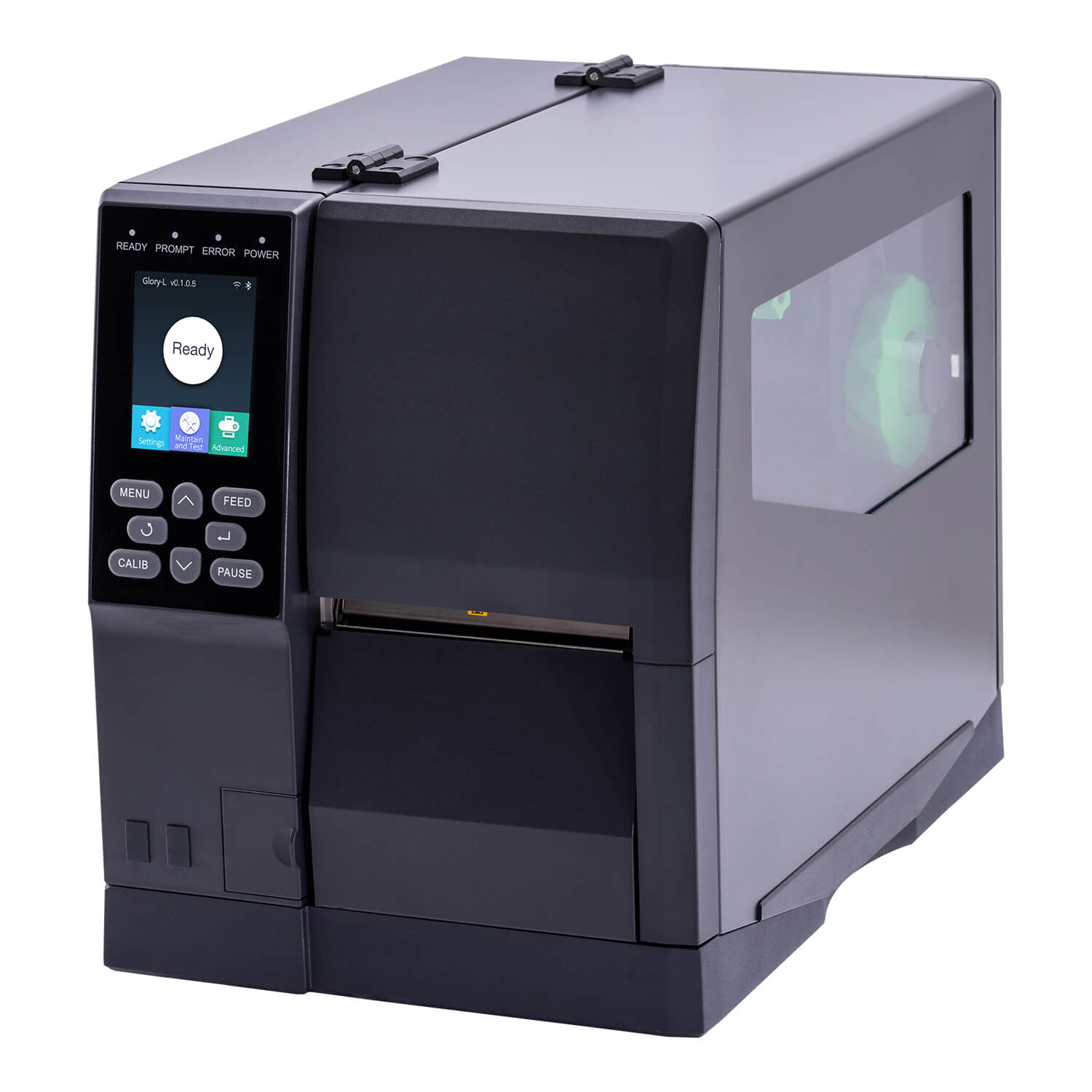
| Manufacturing, high volumes | industrial thermal transfer | multi-shift operation |
Online sellers can choose from the printers for marketplaces, and field teams from the mobile label printers with Bluetooth and a battery.
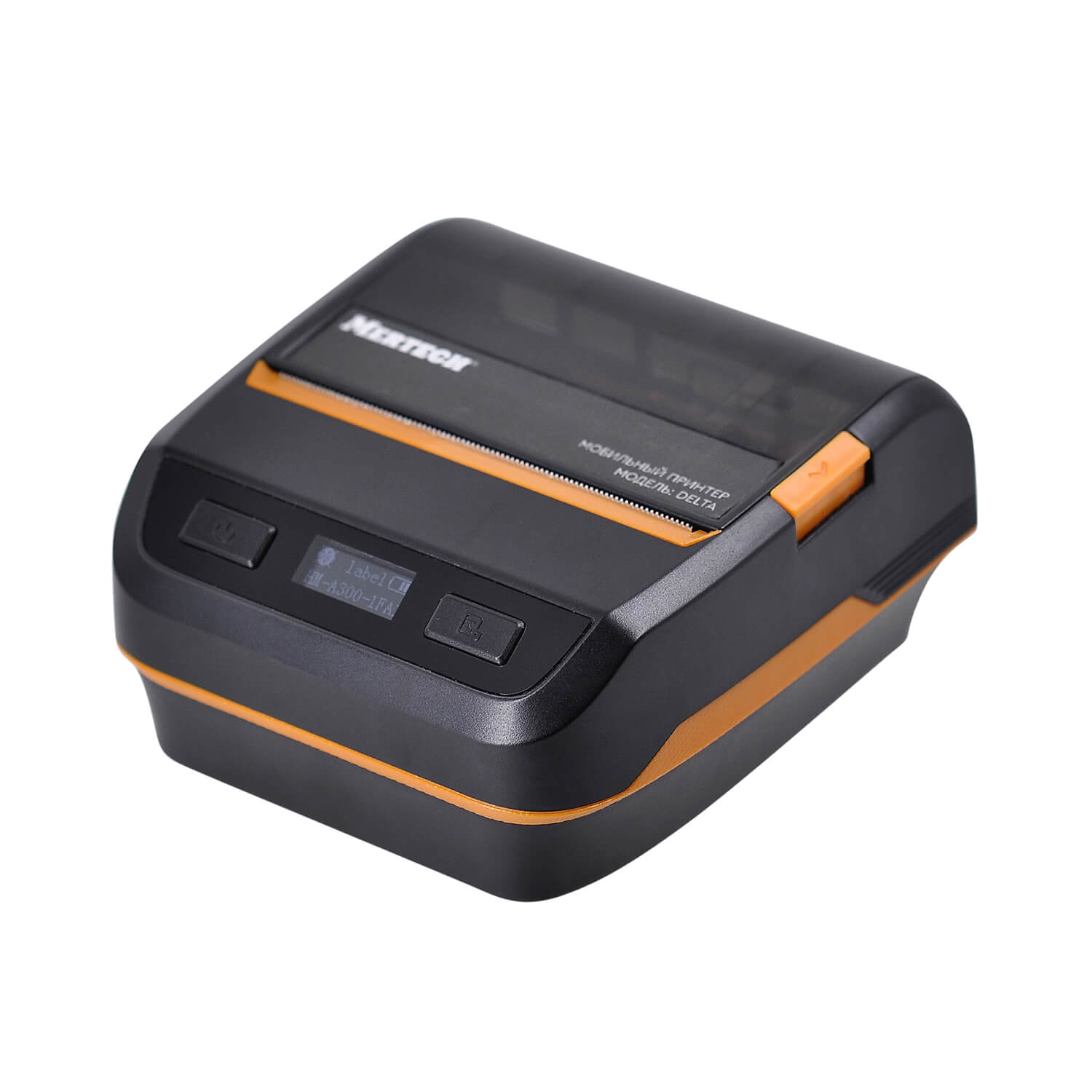
ASL BELGISI. Uzbekistan uses the ASL BELGISI national digital marking system, and Data Matrix codes must stay readable all the way to the customer. For products with a long shelf life or packaging exposed to moisture, use thermal transfer printing with a good ribbon and 300 dpi for small codes.
For ASL BELGISI marking, what matters is not the printer price but whether the code can still be scanned months and years later.
MERTECH label printers and prices
| Model | Print method | Print width | Key features | Price, UZS |
|---|---|---|---|---|
| MERTECH DT58 TEMO | direct thermal | 58 mm media | USB, compact | 1,362,300 |
| MERTECH DELTA | direct thermal, mobile | up to 72 mm | Bluetooth 5.2, 2000 mAh battery | 1,571,900 |
| MERTECH DT80 ZEMA | direct thermal | up to 72 mm | Ethernet, USB, up to 180 mm/s | 1,768,400 |
| MERTECH LP80 EVA | direct thermal | up to 80 mm | RS-232 and USB | 2,240,000 |
| MERTECH TLP100 TERRA NOVA | thermal transfer | 20–108 mm | 100 m ribbon, EasyLoad, up to 10,000 labels a day | 2,947,300 |
| MERTECH HT600 | thermal transfer | 25–108 mm | Ethernet, USB, RS-232, up to 152 mm/s | 3,130,700 |
| MERTECH TLP300 TERRA NOVA | thermal transfer | 25.4–108 mm | 300 m ribbon | 3,353,400 |
| MERTECH G400 | industrial thermal transfer | 104 mm | rolls up to 230 mm, metal housing | 11,527,400 |
Label printer buying checklist
- Label life: a few months means direct thermal; longer means thermal transfer.
- Label material: film, fabric and PET need thermal transfer with a wax-resin or resin ribbon.
- Label width: 58 mm for small tags, 80 mm for marketplace labels, up to 108 mm for logistics.
- Volume: hundreds of labels a day for desktop models, thousands for long-ribbon models, tens of thousands for industrial printers.
- Resolution: 203 dpi for standard barcodes, 300 dpi for small Data Matrix and QR codes.
- Connectivity: USB for a single workstation, Ethernet for networks and warehouse systems, Bluetooth for mobile work.
- Support: warranty, available ribbons and labels, and local service in Uzbekistan.
Frequently asked questions
What is the difference between thermal and thermal transfer printing?
Direct thermal printing darkens heat-sensitive paper and uses no ink. Thermal transfer printing melts ink from a ribbon onto a plain label. Direct thermal prints fade within months, while thermal transfer prints last for years.
Can a thermal transfer printer print without a ribbon?
Most can. Remove the ribbon, load direct thermal labels, and switch the printer to direct thermal mode in the settings or driver.
Which printer do I need for marketplace shipping labels?
A direct thermal printer with up to 80 mm print width is usually enough, since the shipping label only needs to last a few days.
How long does a direct thermal label last?
From a few weeks to about a year, depending on the paper and storage conditions. Sunlight, heat and friction shorten its life.
Which printer is best for ASL BELGISI marking?
A thermal transfer printer for long shelf-life products, with 300 dpi resolution for small Data Matrix codes.